Buying new construction in Estero can feel simple at first. You tour a polished model, compare a few prices, and assume the best builder will be obvious. In reality, the right choice usually comes down to what is written, what is included, and how well the builder communicates from contract to closing. If you want to compare builders with more clarity and less guesswork, this guide will help you focus on what matters most. Let’s dive in.
Why builder comparison matters in Estero
Estero has a housing profile that helps explain why so many new communities center on low-maintenance living, resort-style amenities, and lock-and-leave convenience. The U.S. Census Bureau estimates the village population at 38,443 as of July 2024, with 51.9% of residents age 65 or older and 86.0% of housing units owner-occupied.
That local context matters when you compare builders. You are not just choosing a home. You are choosing a floor plan, amenity style, maintenance approach, and community layout that may shape how easy the home is to enjoy seasonally or year-round.
Estero also places meaningful attention on design and development review. The Village of Estero Community Development Department oversees land use, zoning, site development, and permits, while the Planning, Zoning & Design Board reviews development orders that include architectural and landscape plans.
That means architecture and site planning deserve a close look. In Estero, builder comparison is not only about interior finishes. Exterior design, lot placement, landscaping, and how homes relate to one another are all part of the bigger picture.
Start with architecture and site plan
A model home can make almost any builder look impressive. What matters more is how the homes look and live across the full community, especially once you step outside the front door.
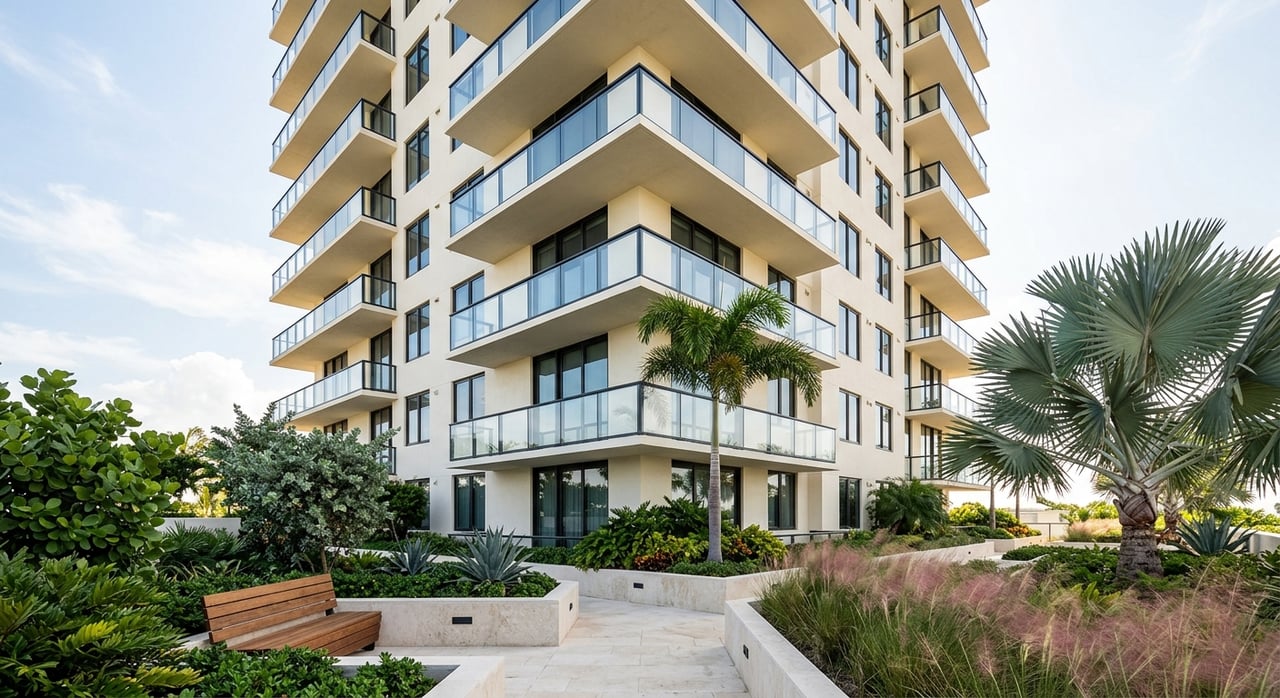
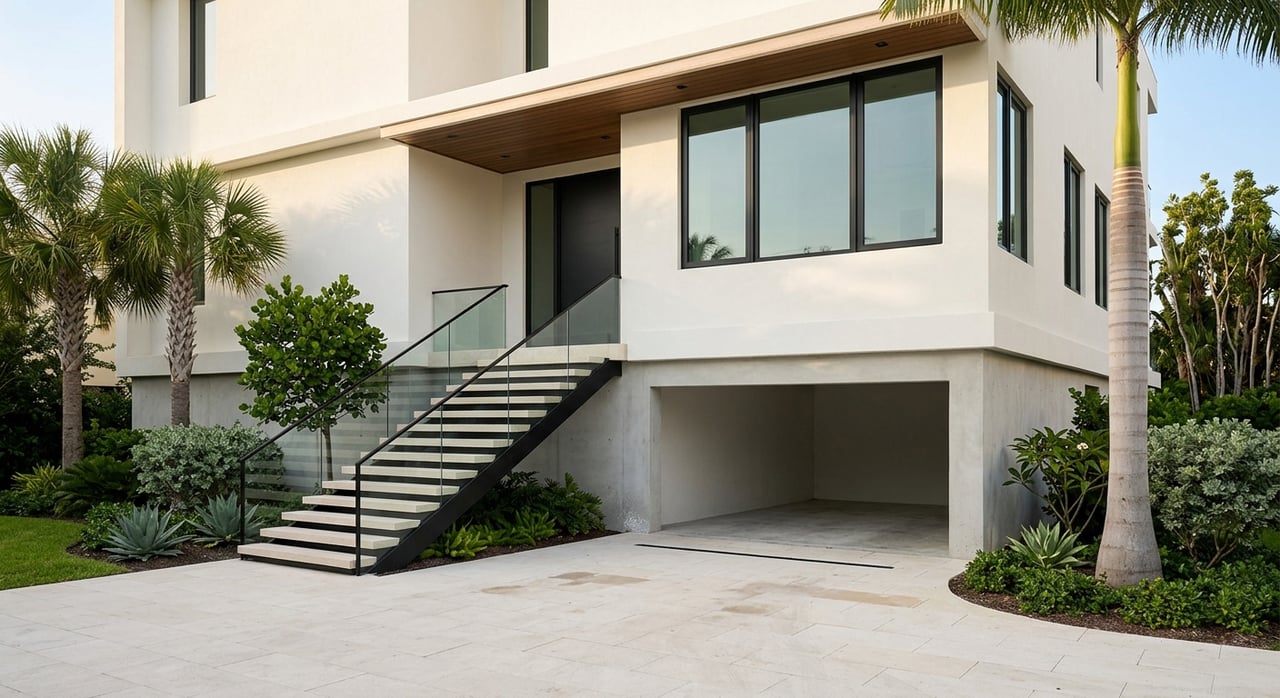
When you compare builders in Estero, look at the exterior language first. Pay attention to rooflines, elevation styles, garage placement, window patterns, lanai design, and how much variation exists from one home to the next.
You should also study the site plan, not just the decorated model. A beautiful floor plan can feel very different depending on lot width, privacy, lanai orientation, distance to neighbors, and whether the view faces water, preserve, roads, or future construction.
Ask direct questions about future phases too. Builder materials may show planned amenities and future layout concepts, but community pages can also note that features and plans may change. In a market like Estero, getting those details in writing is much safer than relying on a brochure or sales-center conversation.
Questions to ask about design and layout
- Which exterior elevation is included in the base price?
- What roof and lanai package comes standard?
- How much space is there between this lot and the next home?
- What future phases or neighboring lots are still to be built?
- Are any nearby amenity areas, roads, or common spaces still under construction?
Compare how the floor plan really lives
Square footage is useful, but it should not be your main filter. Two homes with similar size can feel very different in daily life.
Instead, think about how the plan supports your routine. In Estero, many buyers want easy indoor-outdoor living, comfortable guest space, flexible rooms, and a layout that works well for seasonal stays or full-time living.
Look closely at practical details. A flex room, first-floor primary suite, guest suite, larger laundry room, extra storage, multigenerational option, or stronger connection to the lanai may matter more than a few extra square feet.
The current builder mix in and around Estero shows why this matters. Pulte highlights flexible spaces such as a Planning Center, Everyday Entry, and adaptable room options. Toll Brothers’ Summercrest points to covered lanais, lofts, and optional flex rooms or offices. Those differences can shape how comfortably you live in the home long after the design-center appointments are over.
Look past base price
One of the biggest mistakes buyers make is comparing only the advertised starting price. In new construction, the base price rarely tells the full story.
What matters is the final cost after structural options, lot premiums, design selections, and outdoor-living additions are included. A builder with a higher starting price may offer more standard features, while a lower base price can climb quickly once you add the items you actually want.
This is where Estero buyers need a side-by-side comparison sheet. Lennar, for example, promotes its Everything’s Included approach with features such as quartz or granite countertops, stainless steel appliances, and smart-home technology. Pulte and Toll Brothers place more emphasis on curated personalization through design centers or design studios.
Neither approach is automatically better. The key is understanding whether you want a more bundled package or more customization, and how each path affects your final number.
Compare these pricing items in writing
- Base price for the exact floor plan
- Lot premium for the specific homesite
- Structural options
- Finish upgrades
- Appliance package
- Smart-home features
- Outdoor kitchen or lanai add-ons
- Pool allowance, if offered
- Change-order fees and deadlines
Study warranty coverage and service process
A strong warranty matters, but the service process matters just as much. You want to know not only what is covered, but also how issues are reported and resolved.
Florida law requires a builder warranty for a newly constructed home for one year after title transfer or initial occupancy, whichever comes first. A builder may offer a longer express warranty if it is at least as protective and clearly states transfer terms.
Several builders active in the broader region describe multi-year coverage structures. Lennar outlines a 1-2-10 warranty format. Neal Communities lists 1-year workmanship, 2-year systems, and 10-year coverage. Pulte advertises a 10-year limited home warranty with a transferable standard warranty.
Those terms are useful starting points, but you should go deeper. Ask who handles service requests, whether there is a local warranty team, how requests are submitted, and how quickly items are typically closed out.
Evaluate communication like a feature
For many Estero buyers, communication is not a bonus. It is part of the product. This is especially true if you are purchasing from out of town, buying a second home, or managing the process while working full time.
Some builders have more structured communication systems than others. Pulte says its Construction Manager partners with buyers through four meetings, including pre-drywall and pre-closing orientations, and notes inspections of the foundation, frame, and mechanics during the process. Lennar says buyers are notified about the New Home Orientation by email or phone, may arrange third-party inspections, and can tour some communities in person or virtually.
That kind of process can make a real difference when you are trying to track progress and avoid surprises. Ask who your single point of contact will be after contract, how often you will receive updates, and whether video walkthroughs, photos, or scheduled site visits are available.
Good communication questions
- Who is my main contact after I sign?
- How often will I receive updates?
- Will I get photos or video walkthroughs?
- Can I attend or schedule milestone meetings?
- Will you allow a third-party inspector before closing?
- How are delays or change requests communicated?
Do not skip permits, inspections, and flood questions
In Estero, local process matters. Lee County’s residential building guide states that contractors must use the county’s eConnect permitting system, applications require a state-licensed contractor or owner-builder documentation, and residential plans must comply with the Florida Building Code 8th Edition.
That gives you a practical checklist when comparing builders. Ask who is pulling permits, what inspections are completed, whether a private provider is being used for plan review or inspections, and how permit milestones are shared with you.
Flood and lot-specific due diligence matter too. FEMA identifies its Flood Map Service Center as the official source for flood hazard mapping products and recommends reviewing flood maps and working with the local floodplain administrator when making changes to a home or site.
For you as a buyer, that means lot selection is part of builder comparison. Elevation, drainage, and flood-zone context should be reviewed alongside floor plan, price, and design selections.
Estero builder reference points
The Estero new construction landscape includes a range of builder styles and price points. Looking at active and announced communities can help you frame your comparison.
Lennar at Verdana Village is actively selling with published pricing from $355,999 to $648,999 and promotes resort amenities including indoor pickleball and tennis courts, a resort pool, a community center, and multiple home collections. Lennar at Kingston is coming soon with pricing from the $400s and describes a large recreation package that includes a tropical pool oasis, saloon, sports complex, pickleball courts, fitness center, aerobics studio, and cafe.
Pulte highlights new homes in Estero with customized home designs and Smart Home features. Toll Brothers’ Summercrest is a future gated community centered on low-maintenance living and townhomes, with plans from about 1,944 to 2,570 square feet and features such as covered lanais, lofts, and optional flex rooms or offices.
Neal Communities’ Kingston South is also coming soon from the $400s and is part of a large master-planned vision. For buyers leaning more custom and luxury, STOCK’s WildBlue offers a different point of reference with estate-lot residences in a 3,500-acre master-planned setting with more than 800 acres of freshwater lakes.
A smart builder-comparison checklist
Before you sign anything, ask every builder for the same core information. That makes your comparison cleaner and more objective.
Request these items before signing
- A current site plan and lot map
- A written list of included features
- Upgrade pricing for the exact floor plan
- The warranty booklet and customer-care process
- Permit or inspection status if construction has started
- A timeline that separates estimated dates from guaranteed dates
- Written confirmation of amenity buildout assumptions
- Written verification of HOA or condo rules, if applicable
- School zoning verification in writing
The strongest builder is usually not the one with the flashiest model. It is the one that combines clear architecture, a floor plan that fits your life, transparent pricing, dependable warranty support, and consistent communication throughout the build.
If you want help comparing Estero builders with a more detailed, design-aware lens, EPIC HOMES | REAL ESTATE offers white-glove guidance for new construction buyers across Southwest Florida, including support with builder shortlisting, community comparisons, and remote-buyer oversight.
FAQs
How should you compare builders in Estero beyond price?
- Compare architecture, site plan, floor-plan livability, included features, lot premiums, warranty terms, communication process, and permit or inspection transparency.
What should you ask an Estero builder about upgrades?
- Ask what is standard at the listed price, what counts as an upgrade, and request a written feature sheet and upgrade pricing for the exact floor plan and lot.
Why does lot selection matter in Estero new construction?
- Lot selection affects privacy, lanai orientation, views, future nearby construction, drainage, and flood-zone considerations, all of which can impact long-term enjoyment and cost.
What warranty coverage applies to a newly built home in Florida?
- Florida law requires a builder warranty for a newly constructed home for one year after title transfer or initial occupancy, whichever comes first, and some builders offer longer express warranties.
What should remote buyers request from an Estero builder before signing?
- Request a site plan, lot map, included-features list, upgrade pricing, warranty booklet, permit status if available, a clear timeline, and written confirmation of amenity and community buildout details.